How an engagement runs: the first 90 days, then every month after
Google Ads rewards patience in the first weeks and discipline afterward. This is the sequence we follow with every client, whether you arrive with nothing or with an account that has run for years.
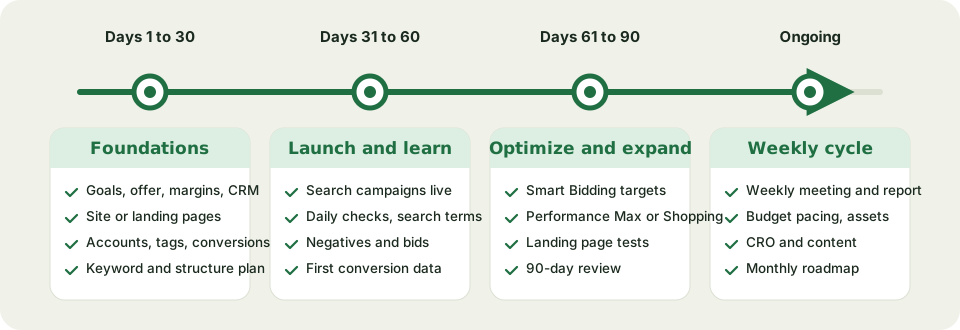
Foundations: the month where nothing spends and everything gets decided
Most wasted Google Ads budget is spent in month one by teams in a hurry. We use the first month to make sure the money that follows lands on a page that converts and is counted correctly.
Week 1: Discovery and access
A kickoff session where we map your offer, margins, average order value or deal size, sales process, service area, seasonality and capacity. We agree on the primary conversion and what it is worth. We collect brand assets, product data and legal requirements. Where accounts exist we receive access through our manager account and audit billing, policy history, conversion actions, structure and change history. Where they do not, we create them in your name and start advertiser verification immediately, because it can take days.
Weeks 2 and 3: Pages, tracking and feed
We build or repair the landing pages, write the copy, and set up the forms, phone links and thank-you pages that tracking depends on. Tag Manager and GA4 go in, conversion actions are defined with primary and secondary status, enhanced conversions are enabled, consent mode v2 is configured if your audience requires it, and call tracking is set up with Google forwarding numbers. E-commerce clients get Merchant Center configured, the feed submitted and disapprovals cleared. B2B clients get the CRM connection prepared for offline conversion import. Every conversion is tested with real submissions before launch.
Week 4: Campaign build and launch readiness
Keyword research turns into a written structure: campaigns by goal and geography, ad groups by theme, match types per keyword, negative keyword lists attached, responsive search ads with pinned headlines, assets, audiences in observation, budgets and bidding strategy. You review the plan and the ads on the weekly call. Depending on how quickly pages and verification were ready, the first Search campaigns go live at the end of this week or the start of the next.
Launch and learn: protecting the budget while data accumulates
The first live weeks are for learning what real searchers do, not for chasing a target that the account has no data to hit yet.
Daily checks in the first two weeks
We watch spend, search terms, disapprovals and conversion firing every day after launch. Irrelevant queries are negated quickly. Ads that Google flags for policy are fixed the same day. If conversions stop recording, we know within hours, not at the monthly report.
Bidding kept simple on purpose
New campaigns start on maximize conversions or maximize conversion value without a target, so Smart Bidding can find volume. We resist setting a target CPA or target ROAS until the campaign has a real conversion history, and we tell you when that threshold is likely to arrive given the budget.
Lead quality feedback loop
On the weekly call we ask which leads were good. Spam forms, wrong-service calls and out-of-area requests get traced back to keywords, locations or ad copy and fixed. For e-commerce we compare Google Ads purchases with the order system to confirm tracking matches reality.
Search terms become structure
Queries that convert are promoted to their own keywords and sometimes their own ad groups with tailored ads and landing pages. Queries that waste money join the negative lists. Broad match is expanded only where the data justifies it.
First report and recalibration
Around day 45 you receive the first monthly report. It explains early cost per conversion honestly, which is usually higher than it will be, what we have learned about demand, and whether the budget split needs to change.
Preparing the next layer
While Search gathers data we prepare what comes next: image and video assets for Performance Max or Demand Gen, Shopping feed labels, remarketing audiences in GA4, and the Local Services Ads profile for eligible trades. Nothing launches until Search is stable and tracking is proven.
Optimize and expand: turning data into targets and new campaign types
By the third month the account knows things. Which keywords and match types produce leads that close. Which locations, devices and hours convert. Which headlines carry the ads. We use that knowledge to tighten and expand at the same time.
Bidding moves to target CPA or target ROAS where volume supports it, with targets set near the observed average and moved in small steps. Campaigns that proved themselves get more budget; campaigns limited by budget get reviewed for impression share lost and either funded or trimmed. We add Performance Max for retail or lead generation with brand exclusions and campaign-level negatives so it finds new demand rather than reclaiming brand searches, or we launch Shopping and Demand Gen if that fits the business better. Landing page tests begin on the pages with the most paid traffic.
At day 90 we hold a review session. We compare results with the goals set in week one, show what changed and why, and present the plan for the next quarter. If the economics do not work and we cannot see a path, we say so plainly. We would rather lose a client than keep spending their money on a channel that is not working for them.
Delivered by day 90
- Search campaigns on Smart Bidding targets with documented thresholds
- Negative keyword lists, brand exclusions and placement exclusions in place
- Second campaign type live or scheduled with a written rationale
- First landing page test completed with a decision
- Tracking reconciled against your CRM or order system
- 90-day review deck and the next quarter's plan
The ongoing month: a weekly cycle and a monthly roadmap
After the launch phase the work becomes rhythmic. Each week has the same shape, and each month ends with a plan for the next one.
| When | What happens | What you see |
|---|---|---|
| Monday | Weekend review: spend pacing, conversion firing, disapprovals, feed status. Search terms from the previous week reviewed and negatives added. | Any urgent issue flagged by email the same morning. |
| Midweek | Bid strategy and target review, auction insights, asset performance labels, experiment status, Performance Max search themes and asset group reporting. Creative and asset refreshes queued. | Changes recorded in the shared log with the reason for each. |
| Weekly call | Results since last week, changes made, lead quality and sales feedback, decisions needed, next week's priorities. | Agenda before, written summary after, dashboard updated. |
| Monthly | Full month review, landing page test result, content published, tracking reconciliation against your records, roadmap for the next thirty days agreed with you. | Monthly report in plain language and the updated roadmap document. |
| Quarterly | Strategy review: new campaign types, geographies, products or audiences; budget plan for the quarter; website and content priorities. | A short quarterly plan and a conversation about goals, not just tactics. |
The services behind each of these steps are described in depth on the services page, and the engagement models that fit each stage are on the pricing page.
Ready to start your first 30 days?
Tell us where your business stands today. We will reply with what the first 90 days would look like for you, including what you need to prepare on your side.